Your Cart is Empty


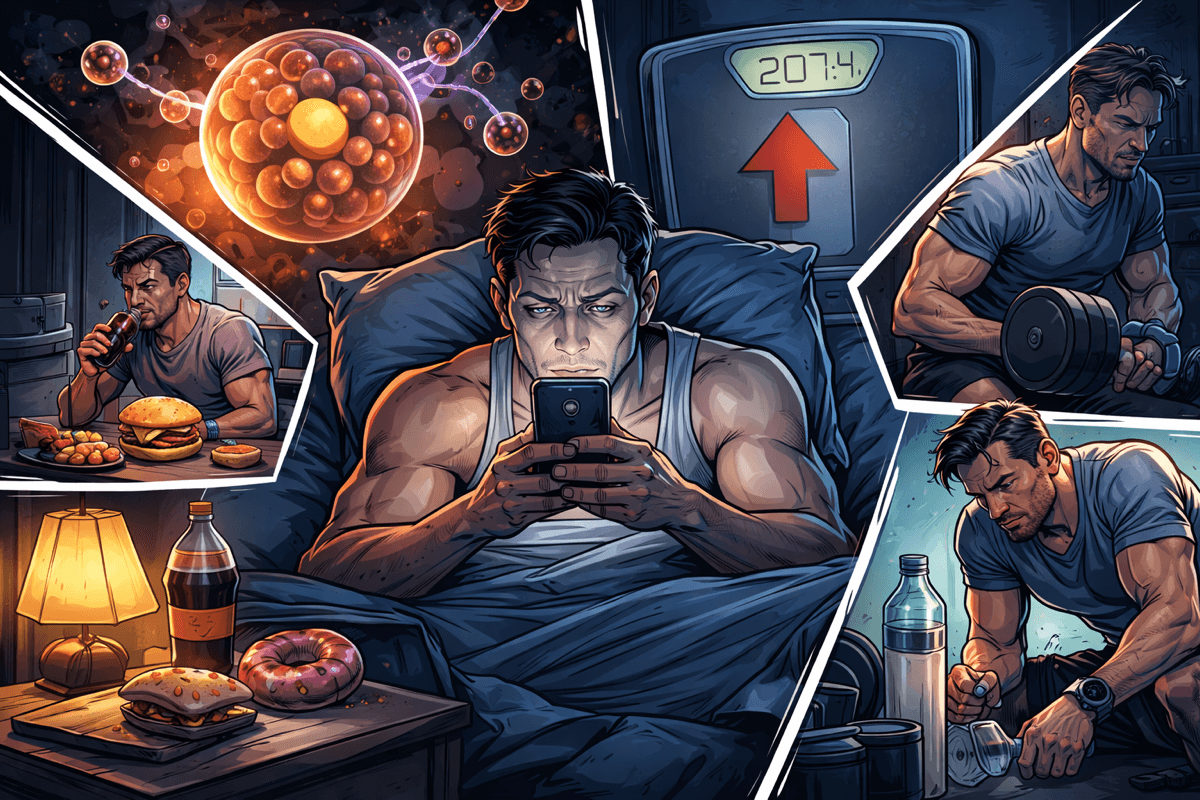

You’re training hard. You’re eating clean. You’ve cut back on late-night snacks. But the fat just isn’t coming off. What gives?
The answer might not be your macros or your cardio—it might be your sleep.
If you’ve ever brushed off a short night as “no big deal,” you’re not alone. But the truth is,poor sleep is one of the most overlooked roadblocks to fat loss. And fixing it might be the missing piece that finally gets the scale moving in the right direction.
Let’s break down why.
 1. Poor Sleep Raises Cortisol—Your Fat-Storing Stress Hormone
When you don’t sleep enough (or sleep poorly), your body releases morecortisol, the primary stress hormone.
High cortisol:
Triggersfat storage, especially around the belly
Increasescravings for sugar and processed foods
Disruptsinsulin sensitivity, making it harder to use carbs for energy
Breaks down muscle tissue over time
It’s a hormonal cascade that favorsfat gain andmuscle loss—the opposite of what you want.
 2. Sleep Regulates Hunger Hormones (And Poor Sleep Screws Them Up)
Two key hormones regulate hunger:
Ghrelin: makes you feel hungry
Leptin: makes you feel full
Lack of sleepincreases ghrelin and decreases leptin, which means:
You’rehungrier than normal
You cravehigh-calorie, high-carb foods
It takeslonger to feel full
The result? You overeat, especially the kind of foods that spike insulin and stall fat burning.
 3. Sleep Drives Recovery—And Recovery Fuels Fat Loss
Your workouts are only as good as your recovery.
Deep sleep is when your body:
Replenishes muscle glycogen
Repairs muscle tissue
Balances hormones likegrowth hormone and testosterone
Clears inflammation
If your sleep is garbage, yourtraining suffers, yourmetabolism slows, and you’re left feeling run-down and less likely to move the next day.
Better sleep = better recovery = better fat-burning potential.
 4. Metabolism Slows Down When You’re Sleep-Deprived
Several studies show that even a single night of restricted sleep candecrease metabolic rate the next day. Over time, poor sleep leads to:
Less thermogenesis (you burn fewer calories at rest)
Less NEAT (non-exercise activity thermogenesis, like walking and fidgeting)
Poor thyroid regulation
This means yourdaily calorie burn drops, even if nothing else changes. And that makes fat loss an uphill battle.

Here’s how to start improving your sleep—and your results:
Wind down consistently: Go to bed and wake up at the same time every day.
Cut screens 60 minutes before bed: Blue light delays melatonin release.
Don’t train too late: Evening workouts can raise adrenaline and cortisol.
Create a cool, dark sleep space: Ideal temp is 65–68°F.
Support with targeted supplements: Natural support like magnesium, GABA, or L-Theanine can help the body relax.
 Final Thoughts: Sleep Isn’t Lazy—It’s Strategic
You can do everything right during the day, but if your sleep is trash, your body won’t be in fat-burning mode.
Sleep isn’t just rest. It’srecovery, hormonal reset, and metabolic alignment—all the things you need to get leaner, stronger, and more resilient.
If you’ve been plateaued,optimize your sleep before you slash more calories or add more cardio. Your body—and your results—will thank you.
Want extra support?
Explore natural recovery solutions like Sleep + Recovery to help the body wind down, stay asleep, and wake up feeling fully recharged.
Looking to boost metabolism during the day without stimulants? Anytime Burn offers clean, non-jittery support to keep fat-burning pathways active around the clock.

